
When a brand asks for a quote on a new hair dryer, the hardest decisions often come before production. Who will use it? What should it do better for those users? Which features belong in the first prototype, and how will the team know whether they work as intended?
Price, minimum order quantity, and lead time still matter. If you are developing a new product, also ask how your hair tool OEM/ODM partner can help you answer those early questions and carry the decisions through to production.
Define the Product Before Choosing the Features
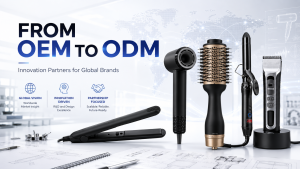
Start with the customer and the setting. A distributor sourcing a compact hair dryer for hotels may prioritize storage, straightforward controls, and packaging suited to its channel. A salon brand developing a straightener may want to spend more time evaluating the grip, plate design, and how the tool handles during repeated styling.
Those priorities give the supplier a basis for recommending a configuration. They also help the brand decide which changes are worth the cost and which can wait. A useful first brief can be short: identify the target market, sales channel, intended user, and one improvement that user should notice.
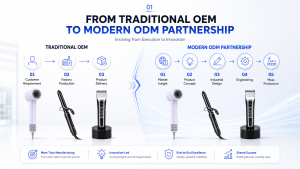
Agree on What the Prototype Needs to Prove
A sample review is more useful when both teams agree on what they need to learn. For a hot air styler, for example, the team could check whether users can identify the right attachment, fit it securely, and complete the intended styling step. Any performance claim planned for the product page should have its own basis for verification.
Ask your supplier who reviews design changes, what the sample can demonstrate, and what still needs engineering validation. Recording those decisions gives both teams a clear reference when they revise the sample or prepare for production.
Use AI to Explore Options Faster
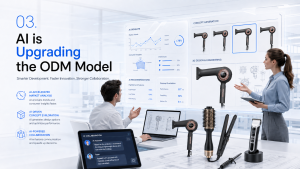
AI can help teams summarize recurring questions in customer reviews, organize market feedback, and compare early concepts. It can also help turn a scattered list of requests into a brief that design, engineering, and sales teams can discuss together.
Treat those outputs as ideas to investigate. Customer feedback helps establish whether a proposed improvement matters. Engineers and sample tests help determine whether the design can deliver it. The two checks answer different questions, and both belong in the development process.
Choose a Partner Who Can Carry Decisions Through to Production
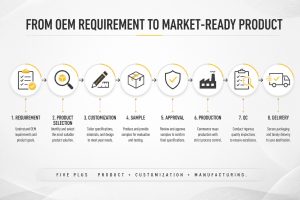
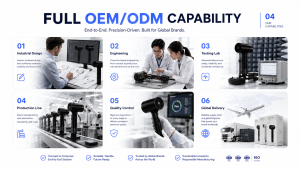
Before committing to a supplier, ask how the project moves from the brief to design review, prototyping, testing, and production. Find out how the team records the approved sample configuration, handles later revisions, and coordinates packaging and delivery requirements for your target market.
The right scope depends on your project. A private label launch may center on selecting an existing model and agreeing on branding and packaging. A more involved ODM project may require additional design work, prototype revisions, and testing. Agreeing on the scope early gives both teams a clearer basis for estimating cost and timing.
Develop Your Next Hair Tool with FIVE PLUS
FIVE PLUS works with brands and sourcing teams on OEM/ODM projects across hair dryers, hair straighteners, curling irons, hair clippers, and hot air stylers. Depending on the project, the conversation can cover product definition, design options, prototype review, testing requirements, and preparation for production and delivery.
Planning a new hair tool or expanding an existing range? Contact FIVE PLUS with your product category, target market, sales channel, and the user experience you want to improve. We can discuss suitable configurations, customization options, and what to evaluate in your first sample.
FIVE PLUS | From Idea to Global Market
